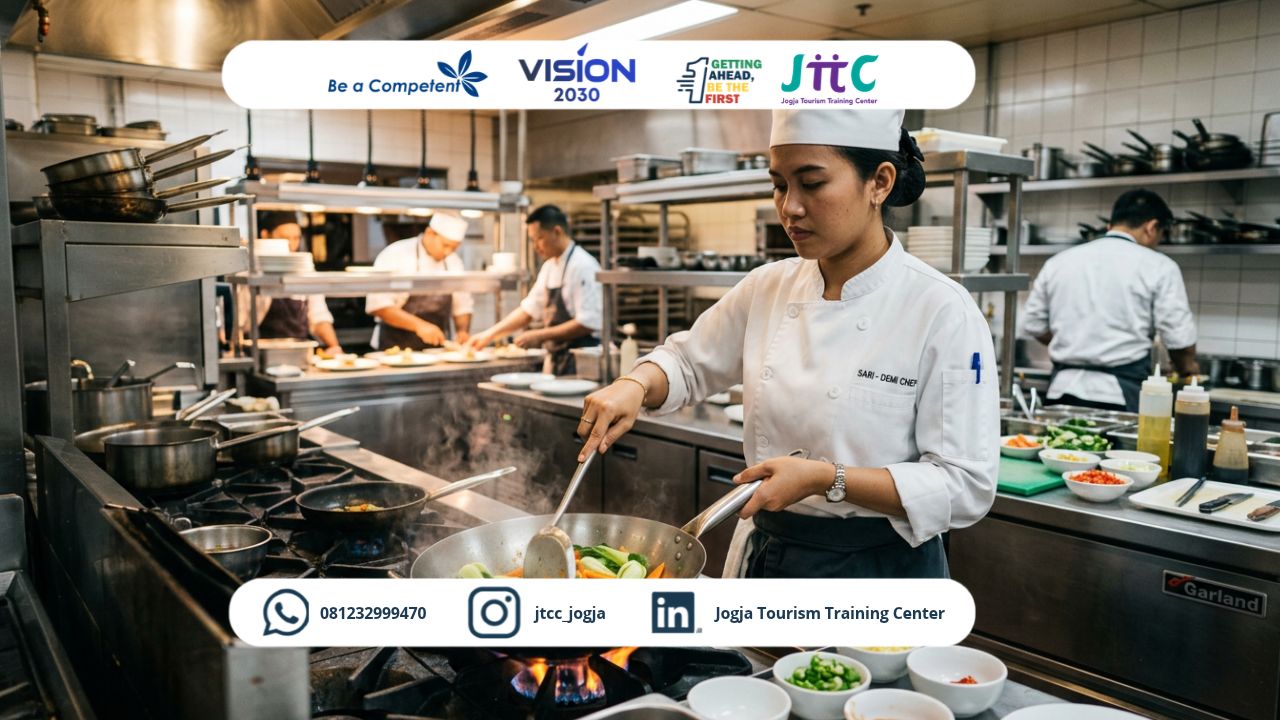
Chef de Partie Training is an excellent opportunity for aspiring chefs and culinary professionals who want to develop their cooking skills, improve kitchen management abilities, and advance their careers in the hospitality industry.
A Chef de Partie, also known as a Station Chef, is responsible for managing a specific section of a professional kitchen, ensuring food quality, maintaining hygiene standards, and coordinating daily kitchen operations.
Whether you want to work in a hotel, restaurant, resort, or catering business, professional training can help you understand the responsibilities of this position and prepare for greater career opportunities.
Jogja Tourism Training Center (JTTC) provides professional training and competency certification programs designed to help participants strengthen their culinary knowledge and prepare for competency assessment in accordance with the applicable Indonesian National Professional Certification framework.
What Is a Chef de Partie?
A Chef de Partie is a professional chef responsible for a particular station or section in a commercial kitchen. Depending on the establishment, this position may involve managing the hot kitchen, cold kitchen, pastry section, grill station, or another specialized area.
A Chef de Partie typically reports to a Sous Chef or Head Chef and supervises the daily activities of kitchen staff assigned to their station.
Their responsibilities include preparing ingredients, cooking dishes according to established recipes, maintaining food safety, controlling ingredient usage, and ensuring that every dish meets the restaurant’s quality standards.
This position is ideal for culinary professionals who want to move beyond basic cooking responsibilities and develop stronger technical, organizational, and leadership skills.
Chef de Partie Training Materials
The Chef de Partie Training program focuses on developing the practical knowledge and professional competencies required in commercial kitchen operations.
Training materials may cover the following areas, depending on the applicable competency scheme:
- Food Preparation Techniques: Understanding ingredients, preparing mise en place, and applying appropriate cooking methods.
- Kitchen Operations: Organizing kitchen activities and managing a designated kitchen station.
- Food Safety and Hygiene: Applying sanitation procedures, maintaining personal hygiene, and preventing food contamination.
- Food Quality Control: Following recipes, maintaining portion consistency, and ensuring dishes meet established standards.
- Ingredient and Stock Management: Monitoring ingredient availability, storing food properly, and minimizing waste.
- Kitchen Equipment: Using and maintaining kitchen tools and equipment safely.
- Team Coordination: Communicating effectively with kitchen colleagues and coordinating food preparation.
- Workplace Safety: Following occupational health and safety procedures in a professional kitchen.
These competencies help participants understand the technical and operational responsibilities expected of a Chef de Partie.
Benefits of Joining Chef de Partie Training
Enrolling in Chef de Partie Training offers several advantages for individuals pursuing a career in the culinary and hospitality industries.
1. Improve Your Culinary Skills
Learn professional food preparation techniques, kitchen organization, and quality control practices that support consistent cooking results.
2. Understand Professional Kitchen Operations
Gain a clearer understanding of how commercial kitchens operate, including ingredient preparation, station management, hygiene, and coordination between kitchen teams.
3. Strengthen Your Professional Profile
Professional training demonstrates your commitment to developing relevant culinary knowledge and workplace skills.
4. Prepare for Competency Certification
Training can help you prepare for a competency assessment based on the requirements of the applicable certification scheme.
5. Support Your Career Development
Developing Chef de Partie competencies can support your professional growth in hotels, restaurants, resorts, catering companies, and other food service establishments.
Training Facilities and Benefits at JTTC
JTTC provides facilities designed to support a structured and comfortable learning experience.
Participants receive the following benefits:
- Training Materials: Learning materials relevant to the training program.
- Training Certificate: A certificate confirming participation in the training.
- Training Kit: Supporting equipment and materials for learning activities.
- Digital Training Materials: Soft copies of training materials for future reference.
- Expert and Professional Trainers: Guidance from experienced trainers with relevant professional knowledge.
- Snacks and Lunch: Meals and refreshments during the training program.
These facilities help participants focus on learning and developing their professional competencies.
Need BNSP Competency Certification?
JTTC collaborates with LSP Jana Dharma Indonesia to facilitate competency assessments for eligible participants under the available certification schemes.
BNSP, or the Indonesian Professional Certification Authority, oversees professional certification within Indonesia’s national competency certification system.
Training and certification are separate processes. Training helps participants develop their knowledge and skills, while competency assessment evaluates whether they meet the requirements of the relevant certification scheme.
A BNSP competency certificate is issued to candidates who successfully meet the applicable assessment requirements.
International applicants should confirm the scheme’s eligibility criteria, assessment language, and certification arrangements before registering.
Need Business Licensing Assistance?
JTTC also collaborates with Lembaga Sertifikasi Usaha Bhakti Mandiri Wisata Indonesia, which can assist with various business certification and licensing needs in the tourism sector.
This service may be useful for hospitality and tourism business owners who want to strengthen their business compliance while developing their employees’ professional competencies.
Why Choose JTTC for Chef de Partie Training?
Choosing the right training provider is an important step toward professional development. JTTC focuses on training and competency development to help participants better understand industry expectations.
Whether you are an aspiring chef, a kitchen employee seeking career advancement, or a hospitality professional looking to improve your culinary competencies, JTTC can help you take the next step.
Start developing your culinary career with Chef de Partie Training at JTTC. Learn professional kitchen practices, strengthen your skills, and prepare for a competency assessment through the available BNSP certification scheme.
Contact JTTC to learn about upcoming training schedules, program fees, assessment requirements, and registration procedures.
Frequently Asked Questions (FAQ)
1. What is Chef de Partie Training?
It is a professional training program designed to develop the culinary, operational, and organizational skills required for a Chef de Partie position.
2. Who can join Chef de Partie Training?
Aspiring chefs, kitchen employees, culinary graduates, and hospitality professionals interested in developing their culinary skills can inquire about the program.
3. Do I need previous cooking experience?
Requirements depend on the training program and certification scheme. Contact JTTC to confirm the prerequisites.
4. What does a Chef de Partie do?
A Chef de Partie manages a designated kitchen station, prepares food, maintains quality standards, and coordinates kitchen activities.
5. What will I learn during the training?
Topics may include food preparation, kitchen operations, food hygiene, ingredient management, quality control, and teamwork.
6. Will I receive a training certificate?
Yes. Participants receive a training certificate upon meeting the program’s completion requirements.
7. Can I obtain BNSP certification after training?
Eligible participants may proceed to competency assessment under an available certification scheme. Certification depends on successfully meeting the assessment requirements.
8. Does JTTC provide BNSP competency assessments?
JTTC collaborates with LSP Jana Dharma Indonesia to facilitate competency assessments under available schemes.
9. Can international applicants join the program?
International applicants should contact JTTC to confirm eligibility, documentation requirements, training language, and assessment arrangements.
10. How can I register for Chef de Partie Training?
Contact JTTC directly to obtain information about training schedules, fees, registration, and competency assessment options.
Take the Next Step in Your Culinary Career
Your culinary career deserves more than experience alone. Invest in your professional development with Chef de Partie Training at Jogja Tourism Training Center (JTTC).
Build your culinary knowledge, strengthen your kitchen management skills, and prepare for competency certification through the available BNSP assessment scheme.
Contact JTTC today to discover the right training program for your career goals and take the next step toward becoming a more confident culinary professional.