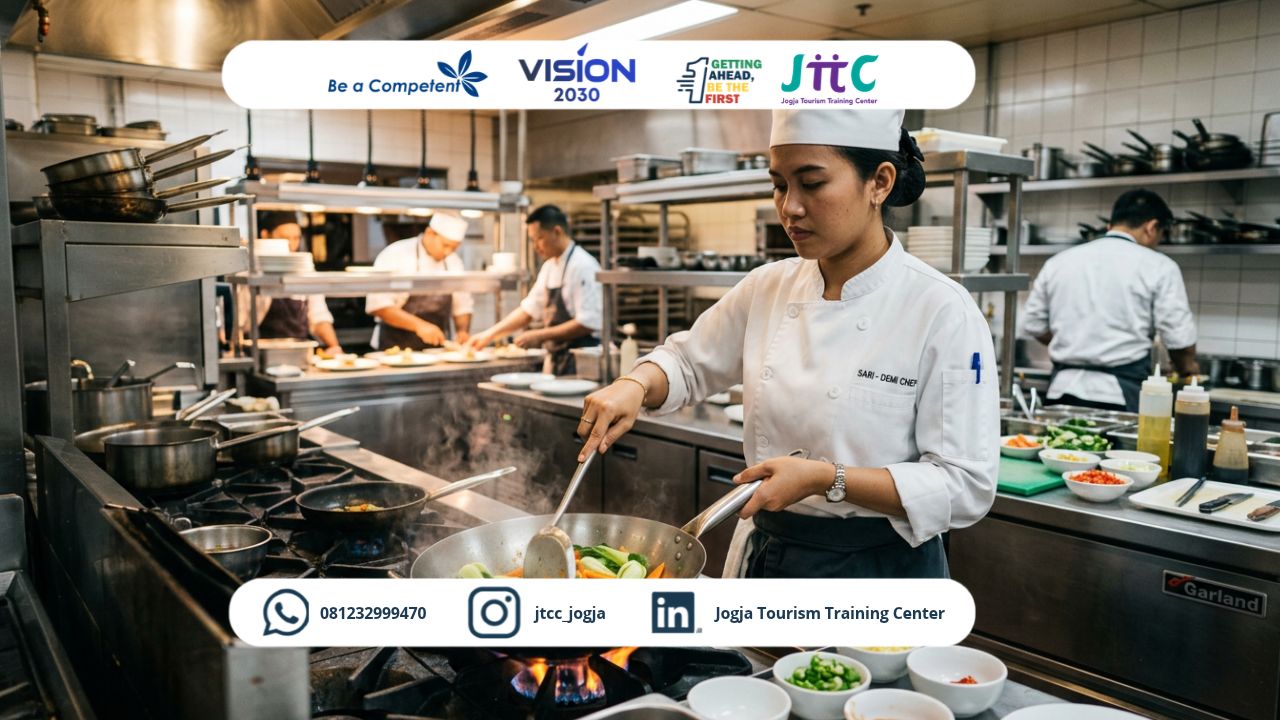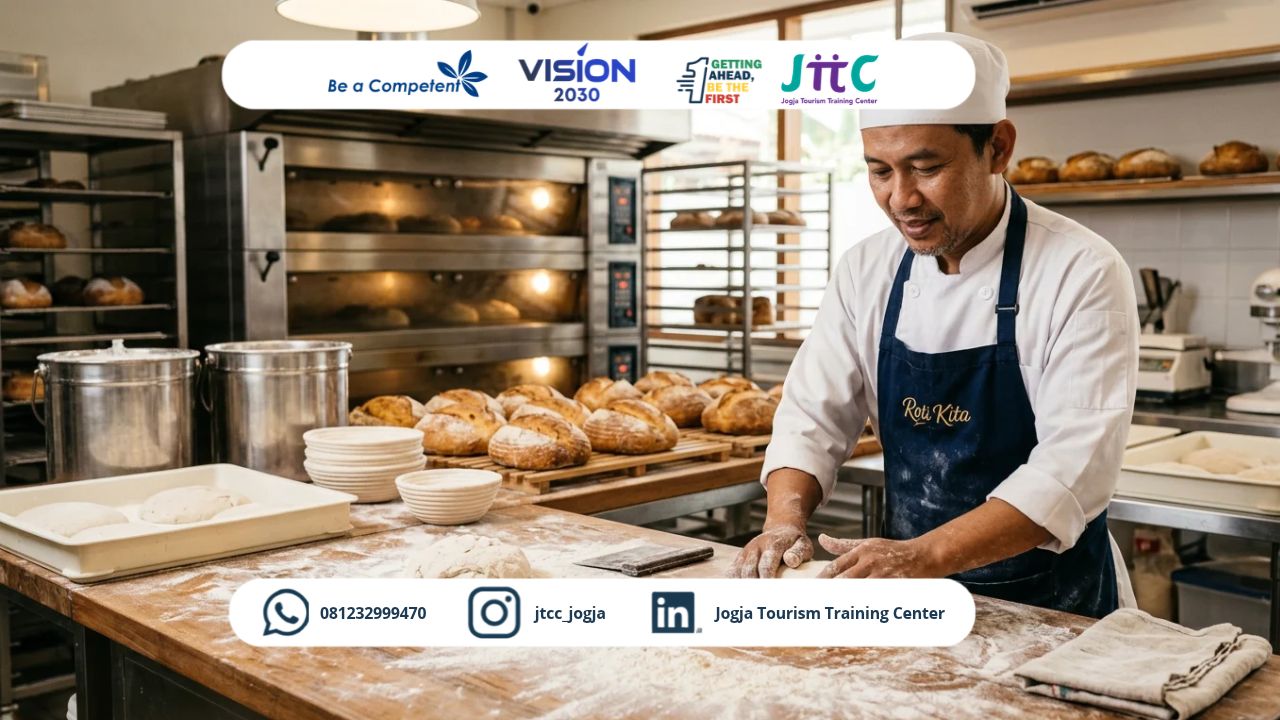
Baker Training is an excellent starting point for anyone who wants to build a career in the bakery, hospitality, and food service industries.
Whether you are a beginner, an aspiring professional baker, or someone who wants to improve existing baking skills, professional training can help you develop the knowledge and practical abilities needed to work confidently in a professional kitchen.
Bakers play an important role in hotels, restaurants, cafés, bakeries, catering businesses, and other food service establishments.
From preparing ingredients to producing bread, cakes, pastries, and other baked goods, professional bakers must understand food safety, ingredient selection, baking techniques, and quality control.
At Jogja Tourism Training Center (JTTC), participants can develop relevant baking competencies through professional training and prepare for a competency assessment through our partnership with LSP Jana Dharma Indonesia.
What Is Baker Training?
Baker Training is a structured learning program designed to help participants understand and practice the essential skills required in professional baking.
Unlike baking at home, professional baking requires consistency, efficiency, hygiene, and the ability to follow standardized recipes and production procedures.
Bakers must also understand how ingredients interact, how to operate baking equipment safely, and how to maintain product quality.
This training is suitable for beginners who want to enter the baking industry and professionals who want to strengthen their existing competencies.
Baker Training Materials Based on BNSP Occupational Competencies
The training materials can be aligned with the relevant Indonesian National Professional Certification Agency (BNSP) occupational competency scheme for bakers. The exact competency units depend on the applicable scheme.
Participants can learn essential topics such as:
- Food Safety and Personal Hygiene: Maintaining personal cleanliness, sanitizing equipment, and preventing food contamination.
- Ingredient Preparation: Identifying baking ingredients and measuring them accurately according to recipes.
- Baking Equipment Operation: Understanding the proper and safe use of mixers, ovens, and other baking equipment.
- Dough Preparation: Learning basic techniques for preparing and handling different types of dough.
- Bread Making: Understanding mixing, kneading, fermentation, shaping, proofing, and baking processes.
- Cake and Pastry Preparation: Learning essential techniques for preparing cakes, pastries, and other baked products.
- Baking Process Control: Monitoring baking temperatures, timing, texture, and product consistency.
- Product Quality Evaluation: Checking the appearance, texture, aroma, and overall quality of finished products.
- Kitchen Organization: Maintaining a clean workspace and managing ingredients and equipment efficiently.
- Storage and Product Handling: Applying appropriate storage procedures to help maintain product quality and freshness.
These learning areas provide a foundation for professional baking. The final training and assessment requirements should follow the specific occupational scheme and competency units offered by the relevant certification body.
Benefits of Attending Baker Training
Professional Baker Training offers several advantages for individuals who want to develop their careers in the food service industry.
1. Develop Practical Baking Skills
Participants can improve their understanding of baking methods, ingredient preparation, and production procedures used in professional kitchens.
2. Improve Product Consistency
Learning standardized recipes and production techniques helps bakers produce consistent results in terms of texture, appearance, and quality.
3. Understand Professional Kitchen Standards
Food safety, hygiene, equipment handling, and workplace organization are essential competencies in bakeries, hotels, restaurants, and catering operations.
4. Prepare for Competency Certification
Training can help participants prepare for a competency assessment based on the applicable occupational certification scheme.
5. Strengthen Career Opportunities
Professional baking skills can support career development in bakeries, hotels, cafés, restaurants, catering companies, and other food businesses. Certification may also strengthen a professional profile when applying for relevant positions.
Training Facilities and Benefits at JTTC
JTTC provides facilities to support a structured and comfortable learning experience.
Participants receive:
- Training Materials: Learning materials relevant to the training program.
- Training Certificate: A certificate confirming participation in the training.
- Training Kit: Supporting materials and equipment for the learning activities.
- Digital Training Materials: Soft copies of the training materials for future reference.
- Expert and Professional Trainers: Learning guidance from experienced and qualified trainers in relevant fields.
- Snacks and Lunch: Refreshments and lunch during the training, subject to the program arrangements.
These facilities are designed to help participants focus on learning and developing their professional competencies.
Looking for BNSP Competency Certification?
If you want formal recognition of your professional competencies, JTTC collaborates with LSP Jana Dharma Indonesia to facilitate competency assessments under the available certification schemes.
It is important to understand the difference between training and certification. A training certificate confirms that you have participated in a training program, while a BNSP competency certificate is awarded through the applicable certification process when the participant meets the assessment requirements.
Certification eligibility, assessment procedures, and required evidence depend on the selected occupational scheme. Contact JTTC to confirm the availability and requirements of the relevant baker certification.
Need Business Licensing Assistance?
JTTC also collaborates with Lembaga Sertifikasi Usaha Bhakti Mandiri Wisata Indonesia, which can assist with various business certification and licensing requirements.
This service may be useful for entrepreneurs who plan to establish or develop a bakery, food service business, or other tourism-related enterprise. Specific requirements depend on the type of business and the applicable regulations.
Why Choose JTTC for Baker Training?
Choosing the right training provider is an important step toward developing professional skills. JTTC supports human resource development through training programs designed to help participants understand the competencies required in their respective industries.
Whether you are starting your baking journey or improving your professional capabilities, structured training can help you build a stronger foundation for your career.
Start Your Professional Baking Journey with JTTC!
Take the next step toward becoming a more skilled and confident baker. Join Baker Training at Jogja Tourism Training Center (JTTC) to strengthen your knowledge, improve your baking skills, and prepare for a competency assessment where applicable.
Contact JTTC today to learn about the available training schedules, program fees, and BNSP competency certification options. Invest in your skills and take a meaningful step toward your future in the professional baking industry!
Frequently Asked Questions (FAQs)
1. What is Baker Training?
Baker Training is a professional learning program that develops the knowledge and practical skills needed to prepare baked products in a professional environment.
2. Who can join Baker Training?
Beginners, aspiring bakers, hospitality workers, bakery employees, and individuals interested in the baking industry can inquire about the program.
3. Do I need previous baking experience?
Not necessarily. Entry requirements depend on the specific training program and occupational competency scheme.
4. What will I learn during Baker Training?
Topics may include ingredient preparation, bread making, cake and pastry preparation, food safety, equipment operation, and product quality control.
5. Will I receive a certificate after training?
Participants receive a training certificate according to the program arrangements. This is different from a BNSP competency certificate.
6. Can I obtain BNSP certification after training?
You may be able to take a competency assessment if you meet the requirements of an available certification scheme.
7. Which organization conducts the competency assessment?
JTTC collaborates with LSP Jana Dharma Indonesia for competency assessments under available schemes.
8. What facilities are included in the training?
Facilities include training materials, a training certificate, a training kit, digital materials, professional trainers, and snacks and lunch, subject to program arrangements.
9. Can business owners also benefit from this program?
Yes. Baking knowledge can help bakery and food business owners improve production practices, product consistency, and operational standards.
10. How can I register for Baker Training at JTTC?
Contact JTTC to confirm program availability, schedules, fees, registration requirements, and competency certification options.